CompStak users always ask for more data, and they need it. But data only matters when it helps them make a decision, and that decision depends on who they are:
Users answered these questions off the platform, often by hand, and not always reliably. Rent Predictor brings that decision into CompStak with a data science-backed answer: tested predictions built on criteria and indexes our team developed.
Customer success connected us with Enterprise clients: brokers, appraisers, and underwriters, from junior associates to senior leaders.
Many were too busy to schedule an interview. So I sat in on sales and client success calls, and watched recordings of past ones, to hear in their own words why prospects didn’t buy and why clients churned.
Alongside interviews and calls, we ran quarterly surveys, studied sessions in FullStory and product analytics, kept a feedback email alias open to every user, and reviewed all feedback every two weeks with the product team and department leads.
Everything went into one FigJam board, sorted into five groups. We ranked the themes together by their impact on churn, revenue, and the user experience, and that ranking decided what we built next.
Junior associates pulled 20 to 30 comps. Senior staff narrowed them down to reach a single number.
That number went into a memo, a client meeting, or an appeal. More comps helped, but the decision itself was still made by hand.
Most used AI for small things, like summarizing their week, not for the work CompStak supports.
Take users from a pile of comps to a rent estimate they can defend, make their job easier and make them look good to their boss, and show them what AI can do with CompStak data inside the workflow they already have.
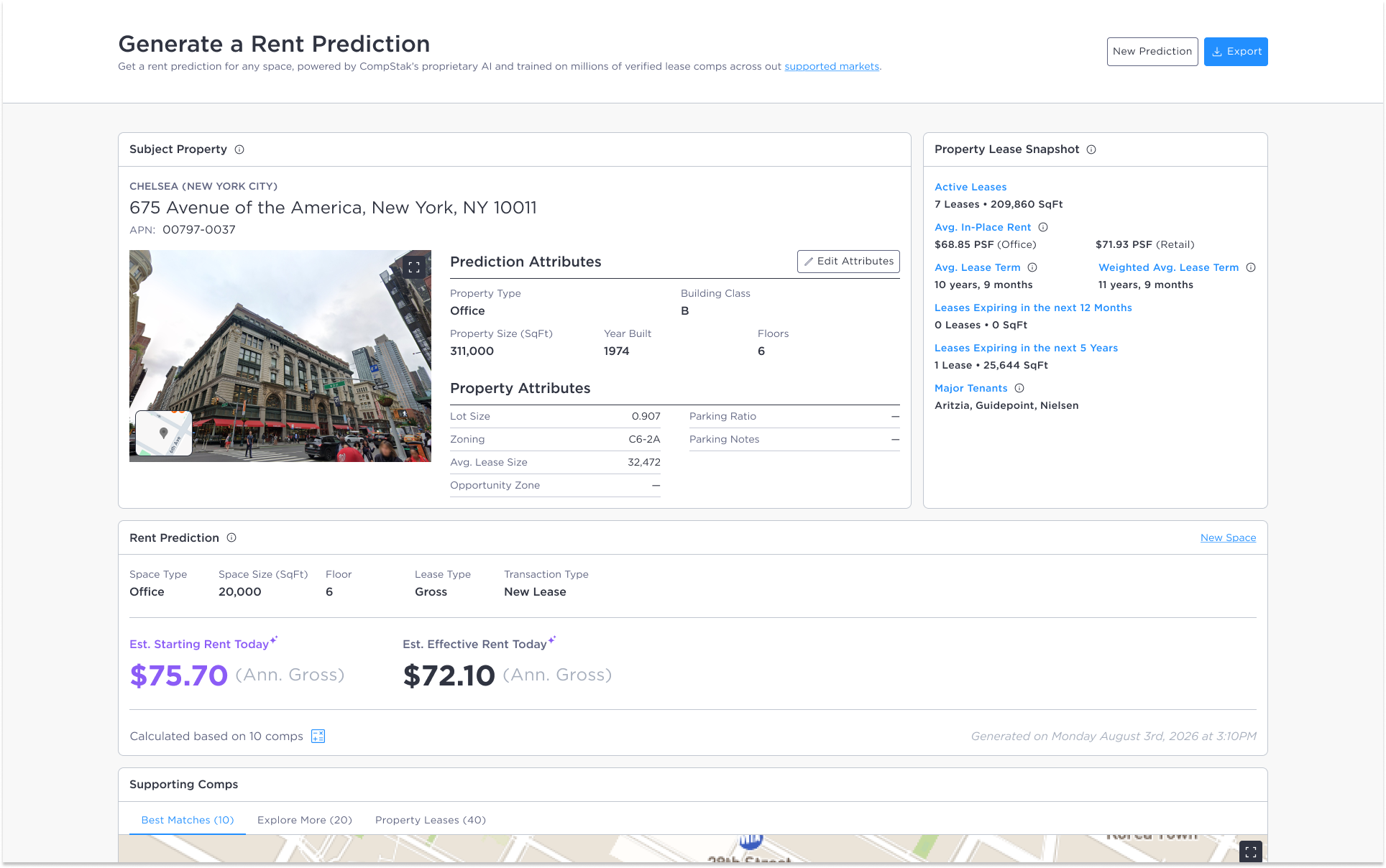
Working with data science, we built an AI-powered tool that predicts rent from the most similar comps, adjusts each one for its differences from the space, and is tuned to each market. Where our data is thin, such as retail, a secondary method fills in so more spaces get an estimate.

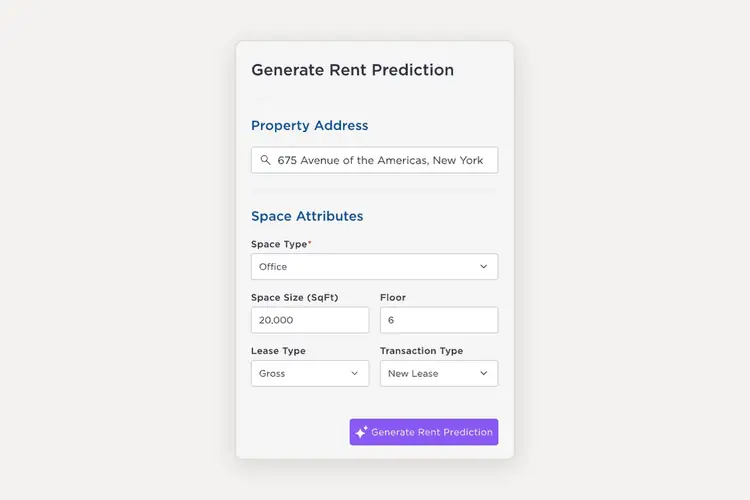
Enter the address, space type, size, floor, lease type, and transaction type.

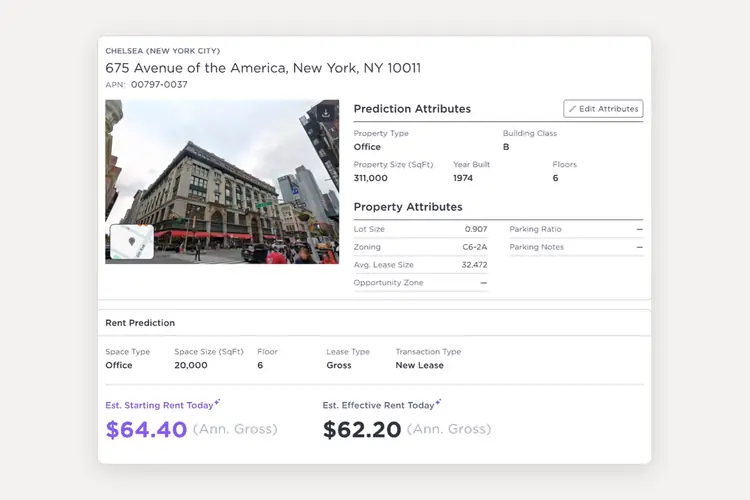
See an estimated starting rent and effective rent for the space.

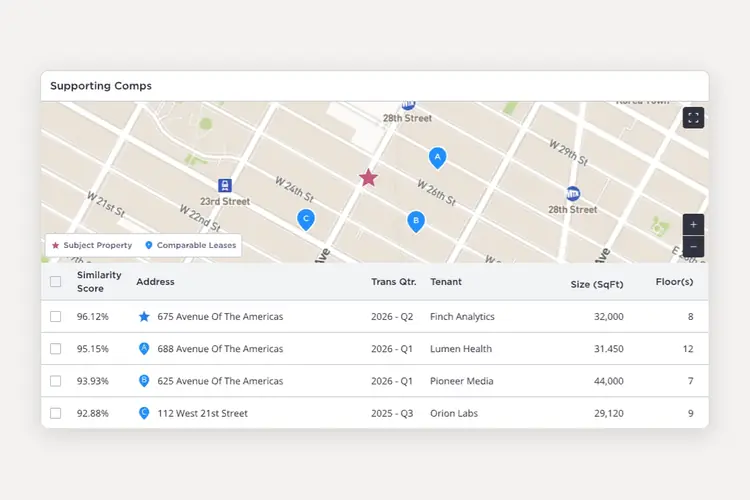
Review the comps behind the estimate on a map and in a table, ranked by similarity score.
With a tight timeline, we built on the components and patterns from our client API frontend, which clients had already tested.
The output is rent for one space, but users are sizing up the whole property. So the prediction sits next to property details and a lease snapshot: active leases, average in-place rent, upcoming expirations, and major tenants.
Similarity scores and per-comp adjustments let users see how an estimate was reached, so they can trust it and defend it.
I designed in Figma, turned designs into dev-ready specs, and built working versions in Cursor. We tested and validated the AI-generated comp sets directly with Enterprise users before launch.
Rent Predictor brought the rent decision into CompStak and changed how quickly we could ship.